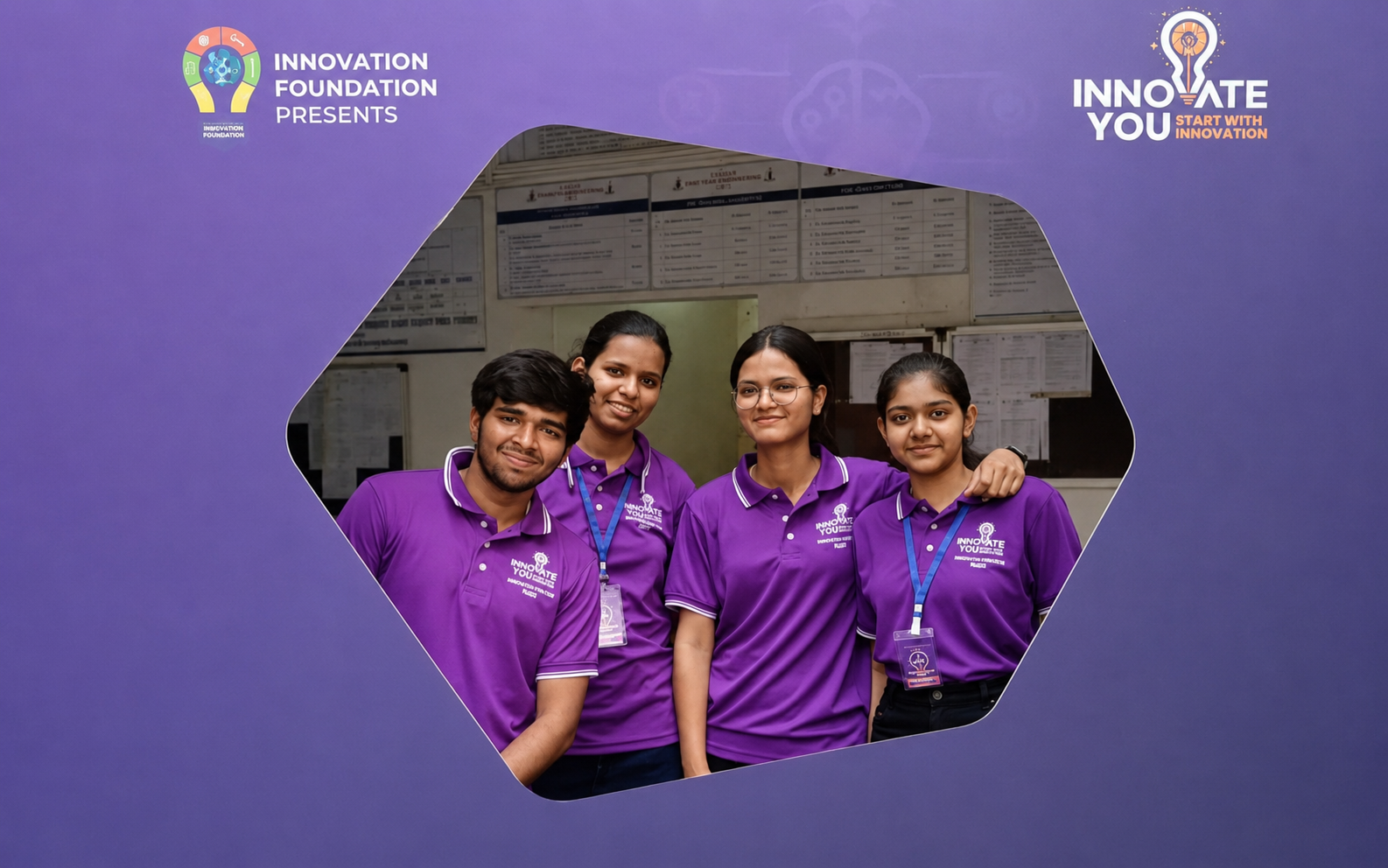
There's a particular kind of madness that only happens between 11 PM and 3 AM — when you're in a room full of sleep-deprived engineers, the deadline is a ticking clock above your head, and someone at your table just said: "Guys… it's over."
That was us. That was Team Alertix. At the InnovateYou Hackathon at AISSMS Institute of Information Technology. And the story of how we went from "it's over" to "we actually built it" — in 24 hours — is the one I want to tell you today.
"It's not the strongest who survive, nor the most intelligent — but the ones most adaptable to change." — Charles Darwin, and also every hackathon participant ever
The Problem That Started It All 🚨
Every second in an emergency is a life. And yet — every day, ambulances get stuck in traffic. Dispatch is manual, slow, and human-error-prone. There's no real-time coordination between the accident site, the hospital, and the signals on the road.
The problem statement that landed on our table: Reduce emergency response time. Simple words. But the weight of what they meant — lives waiting at traffic lights — made it impossible to treat this as just another coding challenge.
The Four Culprits
Delayed accident reporting · Manual ambulance dispatch · No real-time coordination · Traffic congestion blocking emergency routes → All of them combine into one result: avoidable delays in life-saving care.
We Got In. Then the Pressure Hit. 📈
Out of teams across India — we got selected. At that exact moment, something interesting happens to you: confidence shoots up, pressure shoots up harder, and sleep starts sending resignation letters.
Round 1 went well. We had documented everything clearly. Fixed location confusion, removed manual dispatch, brought real-time coordination to the pipeline. Everything felt controlled. Clean. Logical.
And then our mentor — with the energy of someone who has seen a hundred hackathon teams crumble — looked at us and said:
The Part Where It Almost Fell Apart 😅
Ideas came. Ideas died. We stared at each other across a table covered in sticky notes and half-eaten biscuits. And then — someone said it out loud:
"Guys… it's over."
Here's the thing about hackathons though: the universe has a dramatic flair. Just when the ceiling feels like it's coming down — plot twist. The round got delayed.
Second Life Unlocked
In gaming, they call it a respawn. In hackathons, they call it a round delay. Whatever the name — we took it. And we used every borrowed minute.
Enter: The Traffic Orchestration Engine 🚦
New idea. Zero clarity. Full panic. The question on everyone's mind: "How do we actually control traffic signals???"
Me and Gauri Dere became what I'd generously call chaos engineers — brainstormed everything imaginable, rejected about 90% of it, tested APIs at 2 AM, argued about edge cases, and somehow, through sheer stubborn energy — made it work.
The Traffic Orchestration Engine used an A*-like algorithm for optimal routing, detected all signals along the ambulance's path, and dynamically created a Green Corridor — sending real-time alerts to drivers ahead: "Ambulance at 500m — Move Left."
Signal Strategy (Thought Through at 3AM 🧠)
The elegance of it — and this is what we were most proud of — is that it clears the path without causing chaos on the rest of the network. Smooth clearance without a domino effect.
The Night That Defined Us ☕
The second half of the hackathon is where stories are really made. Let me paint you the picture:
The Real Lesson: Adaptability is a Superpower 🦾
I want to talk about something that doesn't always make it into hackathon recaps: what it actually takes to pivot mid-competition and keep going.
We didn't come in with a Traffic Orchestration Engine. We didn't plan it, didn't prepare for it, didn't have a slide about it. When the mentor said "traffic is your problem," we had two choices:
The Two Paths
Option A: Defend what you have, stick to the original plan, hope the judges don't notice the
gap.
Option B: Take the feedback, panic for 15 minutes (justified), then build
something you'd never built before — from scratch — with 2 hours on the clock.
We chose Option B. Not because it was smart — but because we genuinely cared about solving the problem. And that care is what drives adaptability. You don't pivot when you're emotionally detached. You pivot when the problem matters more than your comfort.
"The person who is prepared for everything is prepared for nothing. The person who can improvise — survives." — A truth earned at 3AM
The People Who Made Alertix Real 🤝
Hour 1 to hour 24, non-stop. Built the detection, dispatch, and routing logic. Fixed crashes at midnight. Guided us through our worst ideas. The whole system stood on his shoulders.
Quietly handled everything that holds a project together — APIs, testing, documentation, PPT, brainstorming. The kind of team member who makes you wonder how you'd function without them.
My co-conspirator in chaos. Together we brainstormed everything, rejected most of it, and somehow built the TOE — at a time when sleep-deprived logic is at its most creative.
Fuelled by cold coffee and stubbornness. Panic-brainstormed the TOE alongside Gauri. Wrote this blog to make sure none of this gets forgotten.
What We Actually Built ✅
After 24 hours, this was the system that stood before the judges — not a concept, not a slide deck, but a working, simulated prototype:
- ✔ Accident detection via SOS/manual trigger + precise GPS
- ✔ Intelligent ambulance dispatch (5km → 10km → expanded search)
- ✔ Fail-safe auto-reassignment if the first ambulance fails
- ✔ A*-like optimal route computation + live ETA updates
- ✔ Traffic Orchestration Engine with dynamic green corridors
- ✔ Signal-by-signal priority control (Normal → Skip Yellow → Direct Green)
- ✔ Real-time alerts for vehicles ahead: "Ambulance at 500m — Move Left"
And after all of that — all the panic, the cold coffee, the 3AM revelations, the mentor's blunt feedback — we presented. We explained everything. Traffic. System flaws. Alertix. TOE.
The mentor listened seriously. And then said, with the weight of someone who has heard a thousand pitches:
Two words. That's all. And somehow — it was enough. More than enough.
Would I Do It Again?
In a heartbeat. Messy, sleep-deprived, slightly dramatic — but somehow, we built a system that goes from accident detection to hospital arrival.
Hackathons don't just test what you know. They test what you do when what you know isn't enough. They test whether you fold under pressure or find a second gear you didn't know existed. They test adaptability — and adaptability, I've learned, is not a talent. It's a muscle. You build it every time you choose to keep going when stopping would be easier.
"Would I do it again?" Only if the cold coffee is still there. ☕😌
But seriously — yes. A thousand times yes.
Explore Alertix
The full source code for the Traffic Orchestration Engine and emergency dispatch system — built in 24 hours.